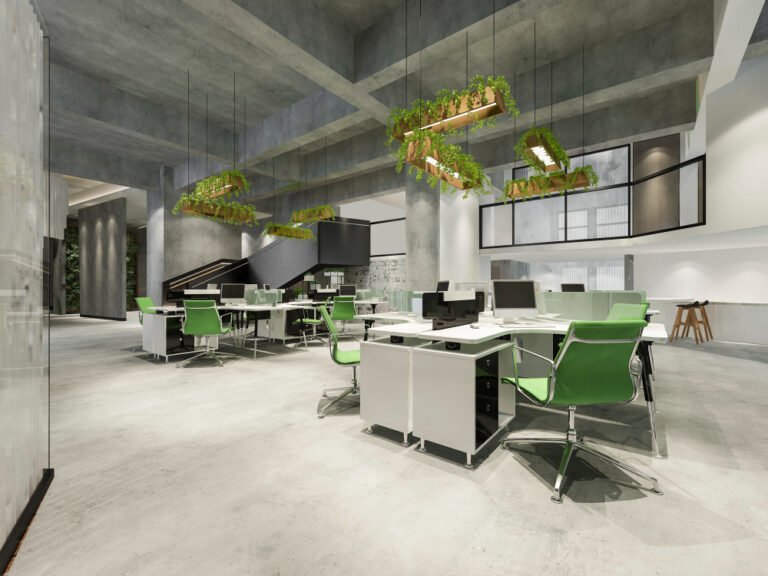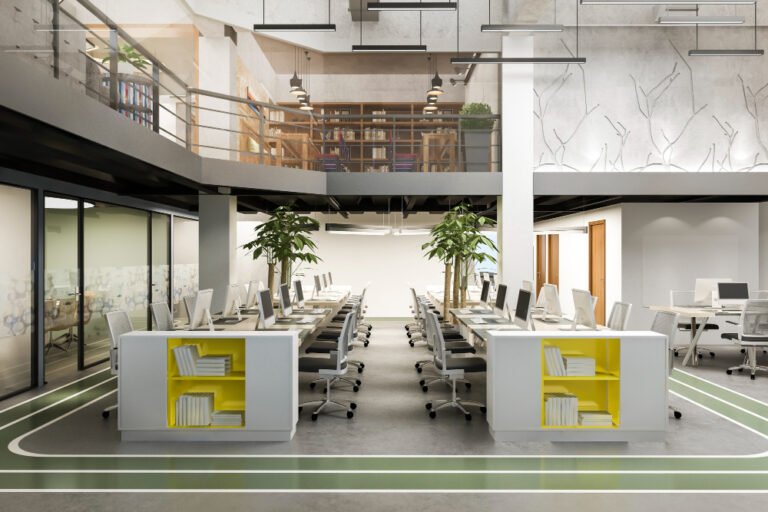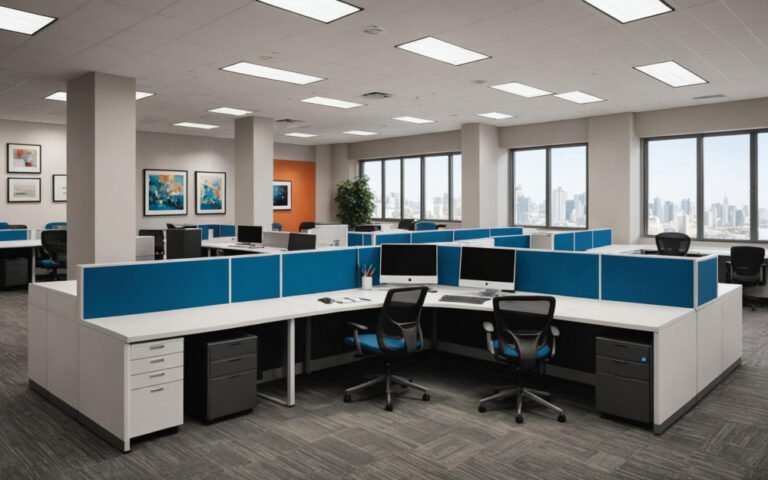

Office interior work usually takes anywhere from 3 weeks to 3 months, depending on the office size, design style, customization level, and construction scope. A small office with basic furniture and simple finishing can be completed much faster, while a large corporate office with custom workstations, glass cabins, premium materials, and advanced lighting naturally requires more time.
In Dhaka, most office interior projects are completed in phases starting from design planning, followed by civil work, electrical setup, furniture production, and final finishing.
Average Timeline for Office Interior Projects
Small Office Interior (500–1000 Sqft)
Estimated Time: 15–30 Days
This type of project generally includes:
- Basic workstation setup
- Simple ceiling & lighting
- Paint and flooring
- Reception desk
- Standard electrical work
Small startup offices or compact commercial spaces usually fall under this category.
Medium Office Interior (1000–3000 Sqft)
Estimated Time: 30–60 Days
Medium-sized offices often require:
- Executive cabins
- Meeting rooms
- Glass partitions
- Custom storage
- Branding walls
- Networking & electrical planning
This is one of the most common office sizes for businesses in Dhaka.
Large Corporate Office (3000+ Sqft)
Estimated Time: 60–90+ Days
Large office projects usually involve:
- Full workspace planning
- Department-wise layouts
- Custom furniture manufacturing
- Advanced lighting systems
- Acoustic solutions
- Premium finishing materials
- HVAC & server coordination
These projects require detailed coordination between multiple teams, which increases the overall timeline.
What Affects the Office Interior Timeline?
The timeline of an office interior project depends on several practical factors. Some offices can be completed within a few weeks, while others may take several months because of design complexity, technical requirements, or customization work. Understanding these factors helps businesses plan their office setup more efficiently and avoid unnecessary delays during execution.
Design Complexity
One of the biggest factors is the overall design style of the office. A modern minimal office with simple layouts, clean finishes, and standard furniture usually takes less time to complete. On the other hand, highly customized corporate offices with premium materials, feature walls, designer ceilings, glass partitions, and custom-built furniture naturally require more detailed work and longer execution time.
Material Selection
The type of materials selected for the project also affects the timeline significantly. Locally available materials can usually be arranged quickly, but imported materials, customized finishes, and premium lighting fixtures often require additional manufacturing and delivery time. Delays in material availability can slow down the entire project schedule.
Electrical & Networking Work
Modern offices are no longer limited to basic electrical setups. Most offices today require structured cabling, internet networking, server rooms, smart lighting systems, access control, and multiple power distribution points. These technical installations require careful planning and coordination, which adds additional time to the project.
Furniture Production
Custom office furniture is another major factor behind project duration. Workstations, conference tables, reception counters, storage cabinets, and executive desks are often produced based on the office layout and dimensions. Since these items are usually manufactured separately before installation, production time directly impacts the overall project completion timeline.
Design Changes During Execution
Frequent changes during construction are one of the most common reasons office interior projects get delayed. Modifying layouts, changing materials, or redesigning furniture after work has already started can affect both timeline and budget. Finalizing the design, materials, and BOQ before execution helps keep the project organized and on schedule.
Standard Office Interior Work Process
A professional office interior project usually follows a structured process to ensure proper planning, smooth execution, and quality finishing. From initial consultation to final handover, every stage plays an important role in creating a functional and professional workspace.
1. Site Visit & Requirement Discussion
The process begins with a site visit where the interior team measures the office space and understands the client’s business requirements, workflow, employee capacity, and design preferences. This stage helps designers create a practical office layout based on real operational needs.
2. Layout Planning & 3D Visualization
After understanding the requirements, designers prepare space layouts and realistic 3D visualizations of the office interior. This allows clients to clearly understand how the final office will look before construction begins. At this stage, workstation arrangements, cabin positioning, meeting rooms, lighting concepts, and circulation flow are finalized.
3. BOQ & Material Finalization
Once the design is approved, the BOQ (Bill of Quantities) and material specifications are prepared. This includes selecting flooring materials, ceiling finishes, lighting fixtures, furniture materials, wall finishes, glass types, and other interior elements. Proper BOQ planning helps control both project cost and execution quality.
4. Interior Execution
This is the main construction phase where the actual office transformation begins. The execution process usually includes:
- Ceiling installation
- Flooring work
- Electrical & networking setup
- Glass & partition installation
- Furniture fitting
- Painting & wall finishing
- Lighting installation
How to Complete Office Interior Work Faster
To avoid unnecessary delays:
- Finalize the design before execution
- Approve materials early
- Choose experienced contractors
- Avoid mid-project changes
- Ensure proper project management
A well-planned project always finishes faster and more smoothly.
Conclusion
Office interior work is a combination of planning, design, technical execution, and finishing quality. While some offices can be completed within a few weeks, premium or large-scale corporate projects naturally require more time for proper execution.
Instead of focusing only on speed, businesses should prioritize quality, functionality, and long-term usability to create a professional workspace that supports both employees and brand image.